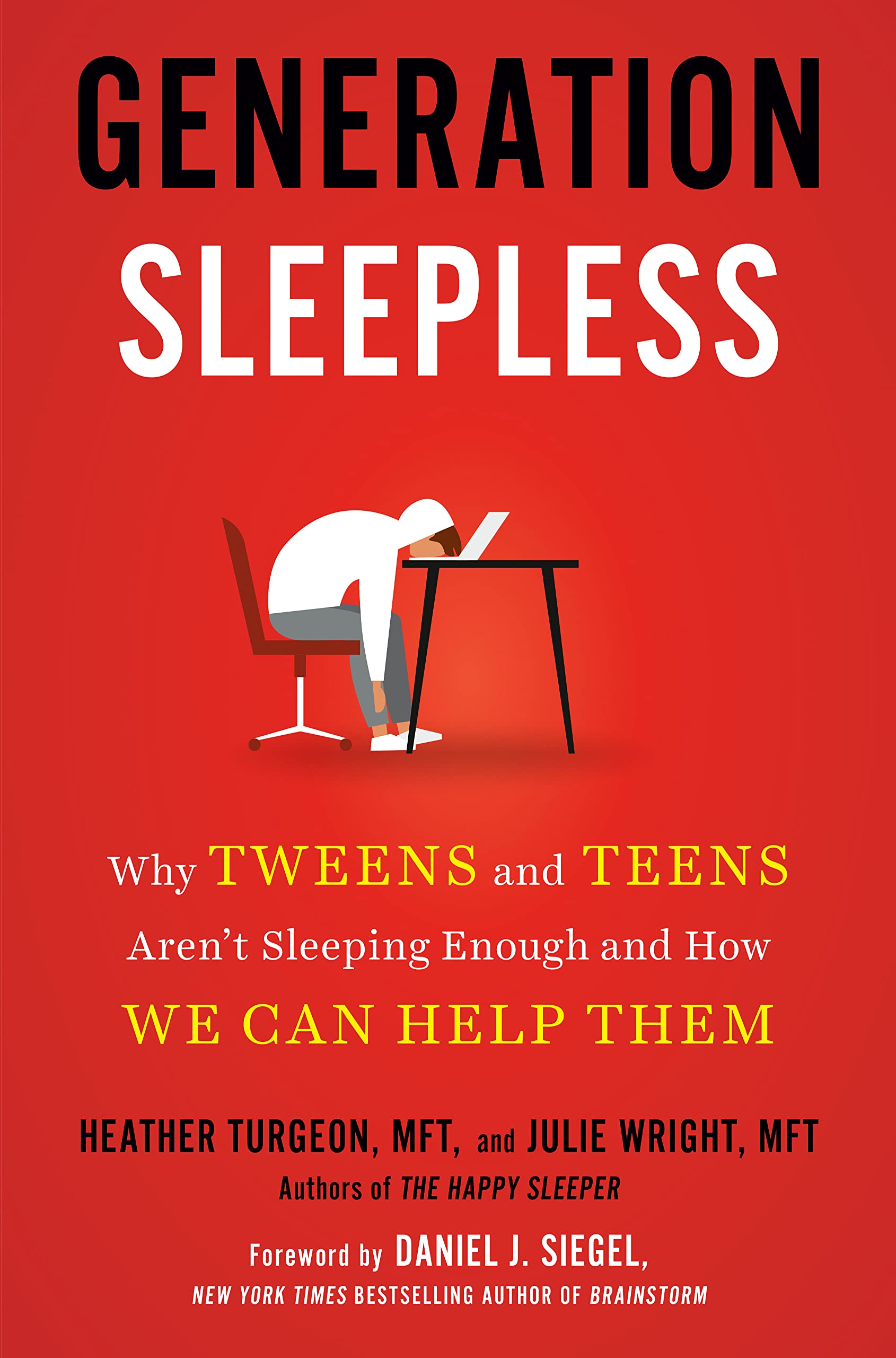
Generation Sleepless: Why Tweens and Teens Arent Sleeping Enough and How We Can Help Them
An intimate glimpse inside a silent epidemic that is harming teens and how parents can help them reclaim the restorative power of sleep.If you could protect your teen from unnecessary anxiety, depression, and chronic stress, and foster a greater sense of happiness and well-being in their life, wouldnt you? In Generation Sleepless, the authors of the classic guide to helping babies and young children develop healthy sleep habits The Happy Sleeper uncover one of the greatest threats to our teenagers physical and mental health: sleep deprivation. Caught in a perfect storm of omnipresent screens, academic overload, night owl biology and early school start times, Generation Sleepless illustrates how our teens are operating in a constant state of sleep debt and social jet lag while struggling to meet the demands of adolescence. In this essential book, Heather Turgeon, MFT and Julie Wright, MFT draw on the latest scientific research to reveal that, at a critical phase of development, many teens need more sleep than their younger siblings, but they're getting drastically less. Generation Sleepless helps readers: • foster a teen's self-motivation for sleeping well • alter family practices around phones, social media, and screen time • draw on an understanding of teens' night owl tendencies to create smart sleep habits • lay out steps for sleep-friendly schools and promoting systemic changes that help teens get the rest they need This first-of-its-kind book is packed with clear and instantly usable advice for parents as well as an eye-opening call to action for teachers, principals, colleges, coaches, and policy makers.
**Generation Sleepless: A Guide for Parents and Educators**
In her book "Generation Sleepless," Julie Wright MFT explores the growing problem of sleep deprivation among teens and tweens. She explains how the use of technology, academic pressures, and social media contribute to this issue while offering practical strategies for parents and educators to help teens get the sleep they need.
**Key Points from Generation Sleepless:**
- The average teen gets only 6.5 hours of sleep per night, which is far short of the recommended 8-10 hours.
- Sleep deprivation is linked to a number of health problems, including obesity, anxiety, depression, and impaired cognitive function.
- The use of technology is a major contributor to sleep deprivation. Teens are spending more time on their phones, tablets, and computers, which keeps them up later at night.
- Academic pressures can also lead to sleep deprivation. Teens are often overwhelmed by homework and extracurricular activities, which makes it difficult for them to get enough sleep.
- Social media can also contribute to sleep deprivation. Teens often spend hours scrolling through social media before bed, which keeps them awake and makes it harder to fall asleep.
**Tips for Parents and Educators:**
- Encourage teens to get regular exercise. Exercise can help to improve sleep quality and duration.
- Make sure teens have a quiet and dark place to sleep. This can help to block out light and noise, which can interfere with sleep.
- Encourage teens to avoid using electronic devices in the hour before bed. This will help to reduce exposure to blue light, which can make it harder to fall asleep.
- Set regular sleep and wake times for teens. This will help to regulate their sleep-wake cycle and make it easier for them to fall asleep at night.
- Talk to teens about the importance of sleep. Educate them about the health risks associated with sleep deprivation and encourage them to make sleep a priority.
By following these tips, parents and educators can help teens get the sleep they need to be healthy and successful.
Rating:
Pages:
304
Language:
English
Related Books :